Two tools, two finish times: three rules for gathering results
最初于 2026年10月1日 发表在 Differ。
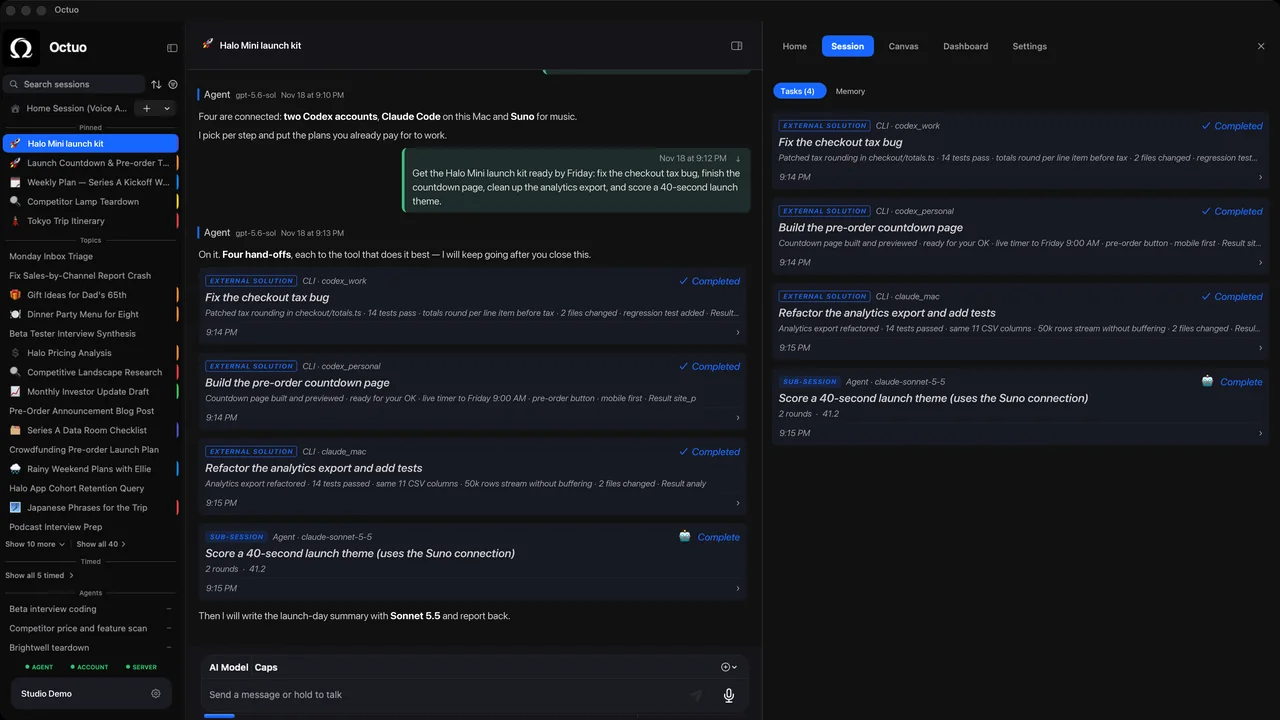
Picture a developer (hypothetical and illustrative) with two tool accounts on one project. One is working through a batch of test failures. The other is drafting documentation for a change. They finish at different times, each in its own window.
Nothing is wrong with either tool. The trouble is the merge: results arrive in different places, in different shapes, with nobody in charge of putting them together. Three rules help with any tools:
- One landing place. Decide where results go before the work starts: a folder, a summary file, one list. Not two chat windows.
- One shape. Ask each tool to report in the same structure: what was done, what changed, what's still open. Comparing gets easy.
- One owner for the merge. Someone, you or a coordinator you trust, decides what ships and what goes back. Otherwise everyone assumes someone else did.
Octuo is a personal assistant for work across AI, tools and specialist services, and coordination like this is what it's built for. For the supported tools and services you connect and authorize, including tools such as Claude Code and Codex (named only as examples of tools it can hand work to), it assigns the task, carries the context each task needs, tracks progress and gathers results. You still decide what ships. It isn't a sync of each tool's native chat history, and each service's own terms and usage limits still apply.
Existing subscription allowances can do more useful work this way, with potential task-cost savings. Savings aren't guaranteed, and external subscriptions and Octuo usage are separate costs.
Octuo is available for macOS.