Rough, usable or final? Say which finish you want before the work starts
You asked for a first look at a flyer layout and received something polished enough to print. You wanted a sketch to react to. The helper delivered a finished page, and now you feel awkward asking for big changes to something that looks done. (A hypothetical scene, for illustration.)
People read "draft", "version" and "a quick look" in very different ways. One short word in the request settles it: say which finish you want. Four levels cover most jobs, and they work with any helper, whether a colleague, a designer or an AI assistant:
- Rough, for deciding direction. Quick, incomplete and even ugly is fine. You want to know whether the idea is right, and nobody should polish anything that may be thrown away. Say so: "Rough. I will react to the idea, not the details."
- Working, for trying it. It does the job from start to end, but the corners are not rounded. It is good enough to run once with real material and see what happens.
- Usable, for sharing with one or two people. Correct, tidy and complete, with the known problems listed. It is ready for a review but not yet for publication.
- Final, for sending or publishing. Checked, formatted and proofread, with sources in place. If it revises something earlier, ask for a change list as well.
Name the finish in the first line of the brief, and name the next one too: "Rough now, working by Wednesday." The helper can then plan the order of work, and you know when to expect each level.
Go up one level at a time. Jumping from rough to final throws away the point of the rough one: if the direction was wrong, the polish was wasted. A usable version that skipped the working stage often hides a problem you could have seen earlier.
Match your review to the finish. A rough version needs a glance and one question: is this the right direction? A usable version needs the checks you would run on any finished work. Proofreading a rough version spends attention you will need for the final one.
Say what even a rough version must get right. "Rough, but with the real numbers" and "rough, but spell-checked" are different requests. If one thing has to be right at every level, say which.
A hypothetical brief: "Rough: three layouts for the event flyer as quick sketches, no images. I will pick one, and we will go to Working on Wednesday." Three plain layouts of boxes and headings come back. You pick the second, and the Working version arrives on Wednesday with the real text in it. Nobody polished a layout you did not choose.
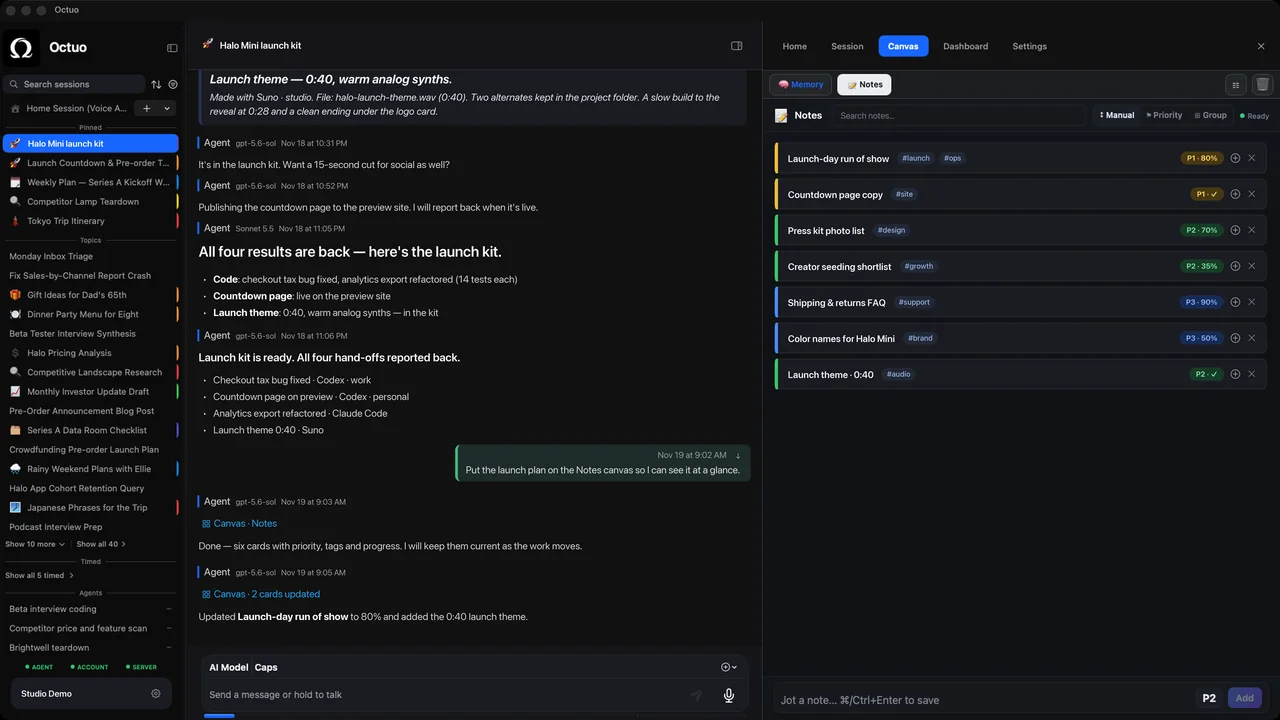
Octuo is a personal assistant and one starting point for work across AI, tools and specialist services. It builds interactive apps and interfaces on a Canvas that it can also see and operate, you can have it build small apps by describing them, and it reports back when a job is done. A rough version is a sensible first thing to ask for, and the finish you want belongs in the description. Octuo is available for macOS.