Is it worth running several AI agents at once?
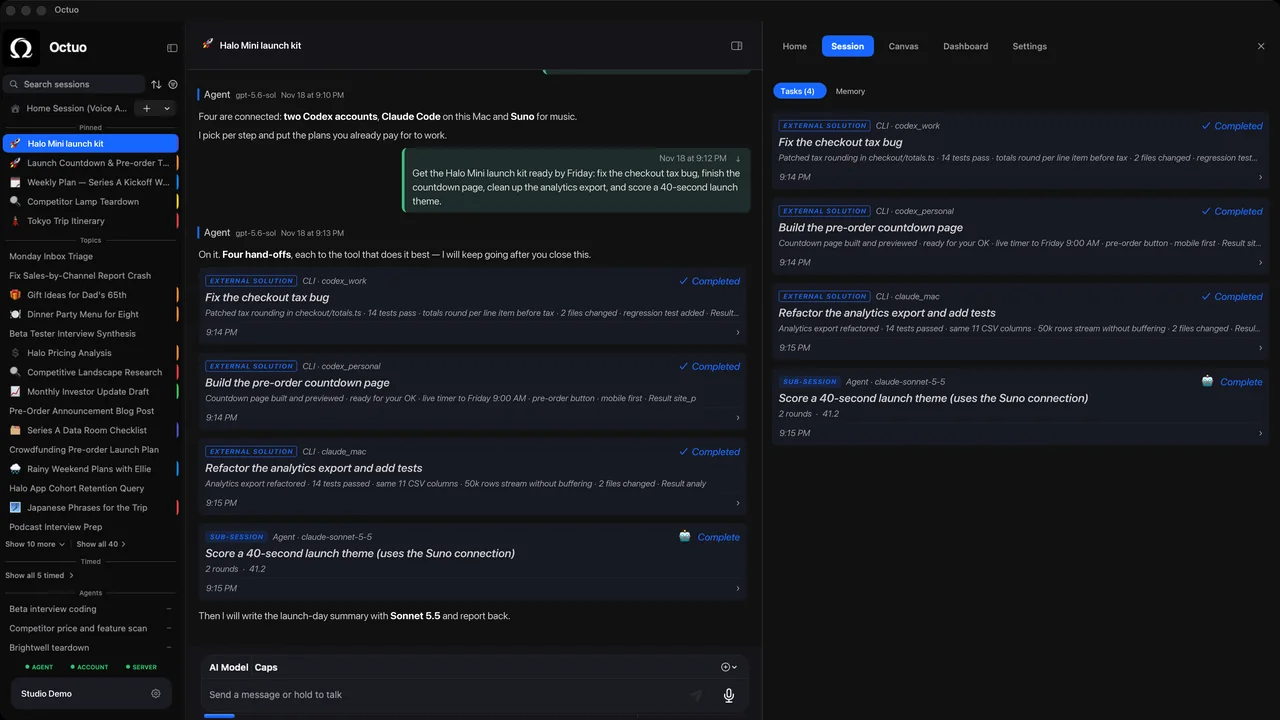
Several agents are worth considering when each can answer a separate question without waiting for the others, and their results can be combined into one decision. Start with research or review. For a small change in one repository, our default recommendation is one agent doing the work, followed by a focused review.
Can the work really happen independently?
Before asking for parallel work, describe each assignment in a sentence. Try: map the relevant code, inspect existing tests, and identify documentation constraints. Give each assignment an output, such as file references and a short findings list. Ask for investigation before authorizing overlapping edits.
The Codex subagents guide recommends starting with read-heavy work: exploration, tests, triage and summarization. It cautions that parallel code edits can create conflicts and coordination overhead. Use that distinction as your first filter, rather than treating every large task as a reason to add workers.
If the next step depends on a previous result, write a sequence instead. Our guide to one helper's output feeding another's input covers that handoff. A dependency is a reason to define an acceptance check before starting the next assignment.
What should stay in the main conversation?
Keep the goal, constraints and final decision together. Delegate the noisy investigation and request a concise summary with evidence. Claude Code describes subagents as workers inside one session that handle a side task in their own context and return a summary.
Codex likewise describes moving exploration notes, test logs and other intermediate output away from the main thread. The benefit is a clearer working conversation: the lead can focus on requirements and results. Ask each worker to report what it found, what remains uncertain, and which files support its conclusion.
For example, a test review should return missing cases and their rationale. It need not return every file it opened. Make the requested output small enough that someone can compare findings without repeating the investigation.
How will edits and results come together?
Choose who owns integration before dispatching work. For shared edits, Claude Code recommends worktrees, which give sessions separate checkouts. Its agent teams do not isolate teammates in worktrees; the guide instead advises assigning different file sets to teammates.
For a first attempt, keep one writer responsible for the change and delegate bounded reviews. Ask the lead to reconcile disagreements against the actual requirements, record unresolved questions, and check the assembled result. Several summaries are intermediate outputs, not the acceptance check.
Our guide to gathering results from two tools provides a useful handoff structure. Specify the destination, expected evidence and stopping point before starting another round of review.
Where Octuo fits
Give Octuo a goal. It delegates work to supported tools and agents, carries the context they need and brings the results back. Octuo supports multi-agent orchestration and sub-agents.
Octuo follows the work and reports back. Progress is there whenever you want to check; decisions that need you come to Attention. You step in for your own account sign-ins, payments and sensitive approvals that must be yours; Octuo handles the surrounding work.
For a small repository change, we still recommend starting with one agent plus review. Let the shape of the work justify additional workers.
New accounts get 1,000 OC trial credits, once per person, no card. OC stands for Octuo Credits.
FAQ
Does adding agents always improve a job? No. Both vendor guides describe increased token usage with parallel agents. Start with independent assignments and assess whether the returned evidence justifies the extra work.
Should every agent edit the same files? Avoid that as a starting arrangement. Use separate ownership or isolated checkouts, then have a designated lead integrate and check the result.
What belongs in a delegation request? State the question, boundaries, expected evidence and output. Say whether the lead should wait for all results before continuing, as the Codex guide recommends.
Sources
The product names above belong to their owners. We have no affiliation with them.