Two drafts, one decision: a four-question scorecard for comparing them
Originally published on Blogger on October 5, 2026.
You asked for two versions of an announcement, and now both are open side by side. Both are fine. You read the first, then the second, then the first again, and you pick the one you read last. That is not a decision. It is the order you looked in. (A hypothetical scene, for illustration.)
Comparing drafts goes better with questions written down in advance, because they take the order of reading out of the result. This scorecard has four questions and takes about five minutes. It works for drafts from a colleague, a template or an AI assistant:
- Which one says what the reader should do, in the first two lines? Cover everything but the openings and read only those. The draft where the action is clearest has won the most important round.
- Which one could you send without checking a fact? Mark every claim, figure and name in each draft. The draft with fewer marks is quicker to finish, and a draft with a claim you cannot source is not finished at all.
- Which one sounds like you on an ordinary day? Read each aloud as if you were the sender. Wherever you stumble, the sentence is not yours yet.
- Which one is easier to fix? A draft that is close to your destination, with problems you can name, beats one that is polished but off in a way you cannot pin down.
Score each draft 0, 1 or 2 on every question, add the numbers and then pause. If the totals are close, do not agonize. Take the one that wins the first question and borrow the best lines from the other. If one wins clearly, you have your answer in five minutes and a reason you can write down.
Blind it if you can. Remove the labels, and any hint of which person or tool wrote which, and ask a second reader to score the two without telling them what you think. People are quick to like whatever they believe came from a favorite source.
Keep the scorecard. Next time you will use the same four questions, and after a few rounds you will see a pattern in your choices. If you always pick the shorter one, say so in the next brief and save yourself a round.
A hypothetical case: two announcements about a new meeting time. Draft A opens with "Starting Monday, the team meeting moves to 10:00". Draft B opens with two sentences of background. A wins the first question. B contains two figures to check and A contains one, so A wins the second. Both read fine aloud. B is easier to fix, since its problems sit in one paragraph. A takes the total, and you borrow B's last sentence for the close.
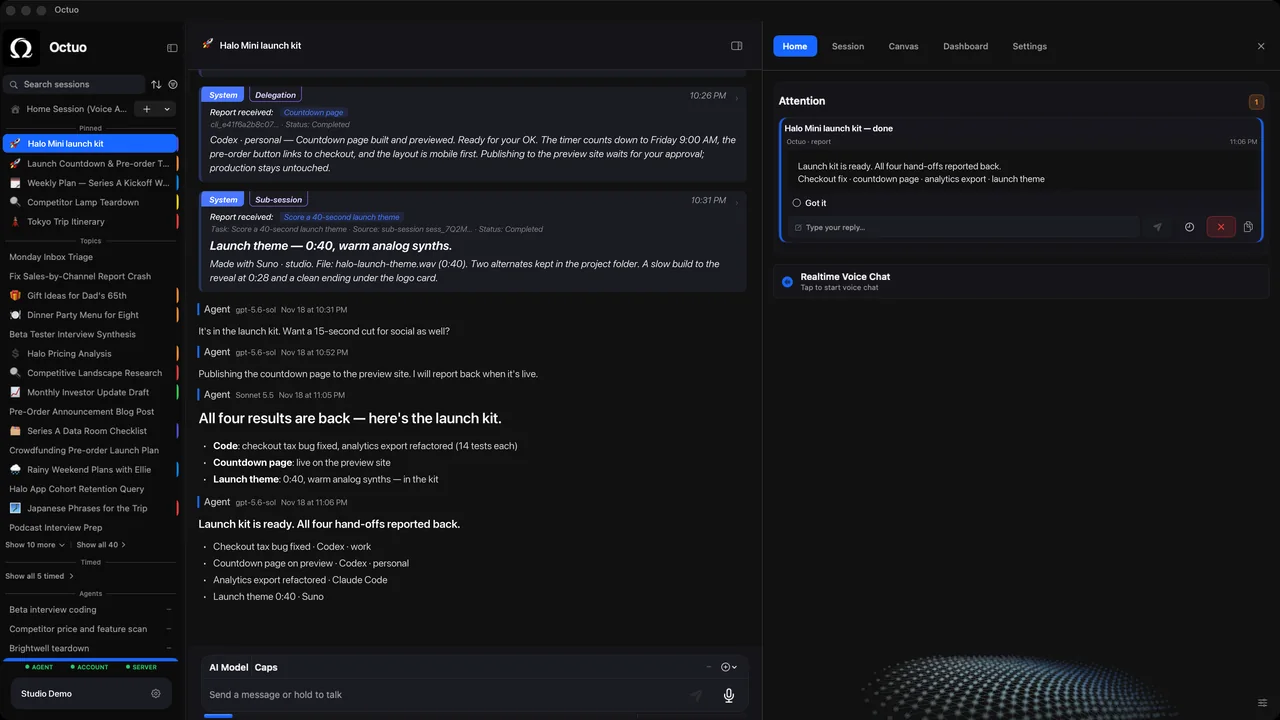
Octuo is a personal assistant and one starting point for work across AI, tools and specialist services. It gives you access to many models from different providers, with the choice of which to use for what left to you, and it reports back when a job is done. Asking for the two drafts from different models and scoring them with the same four questions is one way to use that choice. Octuo is available for macOS.