Put a footer on every recurring report: five lines that keep it honest
Originally published on Blogger on October 5, 2026.
A weekly report has a way of becoming furniture. It lands in the same inbox at the same time, people nod at the same chart, and nobody can say any more where the numbers come from or whether the person who set it up still owns it. The report keeps running long after it has stopped being checked.
A short footer fixes most of that. It takes a minute to write, and it turns a report from something that appears into something that can be audited. It works for reports made by people, scripts or AI assistants, and it works best as a template that gets copied each time. Five lines:
- Sources. Name every file, sheet, dashboard or system the figures came from, and say which version or export you used. When a number looks wrong, this line tells you where to look first.
- Period. State the exact date range covered, with the time zone if it matters. "Last week" means different things on different days.
- Changes. Say what is different from the previous edition: a new source, a changed definition, a filter someone added. A figure that moves because a definition moved should never look like news.
- Owner. Name the person responsible for the report and who to ask about it. A report without an owner gets quietly trusted and never fixed.
- Review date. Write down when the report itself will be reviewed, not the numbers, the report, and what the question will be: do we still need this, and does anyone act on it?
Some reports earn a sixth line: what this report cannot tell you. If a weekly sales figure leaves out returns, say so in plain words where readers will see it. It is a small habit that stops a good report being used for the wrong decision.
Here is a hypothetical footer in full, for illustration: "Sources: sales export of 2026-10-02, returns sheet v3. Period: 2026-09-25 to 2026-10-01, Pacific time. Changes: returns are now subtracted. Owner: the operations lead. Review: end of the quarter." Five short lines, and a stranger could trace the number from them.
Put the footer in the same place every time, below the last chart, in smaller type. People will rarely read it, and that is fine. It only has to be there on the day somebody needs it.
Try this test. Hand last month's report to someone who has never seen it and ask them to find where one figure came from, using only the footer. If they can, the footer is working. If they cannot, the line they got stuck on is the one to rewrite.
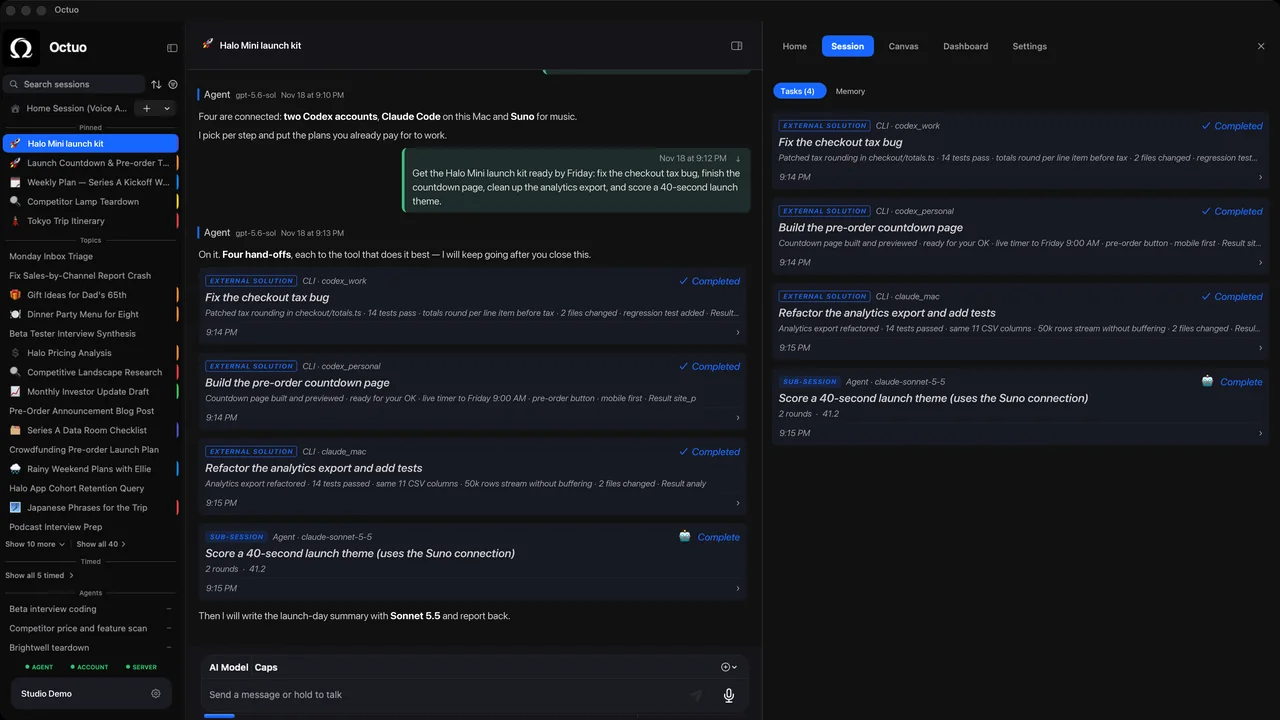
Octuo is a personal assistant and one starting point for work across AI, tools and specialist services. It operates external solutions on your behalf, it can control the browser and perceive your screen under your control, and it reports back when a job is done, so the gathering step behind a report is something you can hand over. Octuo is available for macOS.